miércoles, 6 de julio de 2016

Marguerite Duras entrevista a Francis Bacon


No dibujo. Empiezo haciendo todo tipo de manchas. Espero lo que llamo «el accidente»: la mancha desde la cual saldrá el cuadro. La mancha es el accidente. Pero si uno se para en el accidente, si uno cree que comprende el accidente, hará una vez más ilustración, pues la mancha se parece siempre a algo. No se puede comprender el accidente. Si se pudiera comprender, se comprendería también el modo en que se va a actuar. Ahora bien, este modo en el que se va actuar, es lo imprevisto, no se lo puede comprender jamás: It's basically the technical imagination: “la imaginación técnica”. Durante mucho tiempo, he buscado un nombre para esta forma imprevisible, con la que se va a actuar. Sólo he encontrado estas palabras: imaginación técnica.

Entienda usted, el tema es siempre el mismo. Es el cambio de la imaginación técnica lo que puede “dar la vuelta» al tema, el sistema nervioso personal. Imagine escenas extraordinarias, esto carece de todo interés, desde el punto de vista de la pintura, esto no es imaginación. La verdadera imaginación está construida por la imaginación técnica. El resto es la imaginación imaginaria, y esto no lleva a ninguna parte. No puedo leer a Sade por este motivo. No me asquea del todo, pero me aburre. También hay escritores mundialmente conocidos que tampoco puedo leer. Escriben cosas que son historias sensacionales, sólo esto. But they have not the technical sensation.

Es siempre por medio de los técnicos, como se encuentran las verdaderas aperturas. La imaginación técnica es el instinto que trabaja fuera de las leyes, para volver al tema sobre el sistema nervioso con la fuerza de la naturaleza.

Hay jóvenes pintores que excavan la tierra, toman la tierra y luego exponen esta tierra en una galería de pintura. Es tonto, y prueba la falta de imaginación técnica. Es interesante que tengan ganas de cambiar de tema, hasta el punto de llegar a esto: arrancar un pedazo de tierra, y ponerla sobre un pedestal. Pero, lo importante sería que la “fuerza”, con la cual arrancan la tierra, “regresara”. Que el pedazo de tierra sea arrancado, sí, pero que sea arrancado a su sistema personal y hecho con su imaginación técnica.

La noción de progreso en la pintura, ¿es una falsa noción?

Es una falsa noción. Tome la pintura paleolítica del norte de España -no me acuerdo del nombre de la gruta-. Ahí se encuentran, en las figuras, movimientos que nunca han sido mejor captados. El futurismo está “completamente” allí. Es la escenografía perfecta del movimiento.

La noción de progreso personal, ¿es falsa también?

Menos falsa. Se trabaja sobre uno mismo para obligarse a desarrollar las cosas de forma cada vez más aguda.

¿Qué es el peligro?

La sistematización. Y la creencia en la importancia del tema. El tema no tiene ninguna importancia. El talento puede regresar, marcharse. Las excepciones de la historia son Miguel Angel, Ticiano, Velázquez, Goya, Rembrandt: nunca regresión.

Se progresa ¿cómo?

- Work. Work makes work. ¿Está usted de acuerdo?

No. Es necesario un punto de partida. Sin esto, es inútil trabajar. Cuando leo ciertos libros, encuentro que escribir de un determinado modo es aún escribir menos, que no escribir en absoluto. Que leer de determinada manera es aún leer menos que no leer en absoluto, etc.

En pintura es parecido. Pero no se sabe nunca con la imaginación técnica, ésta puede dormir y un buen día despertarse. Lo principal es que esté allí.

Volvamos a las manchas de color.

Sí. Espero siempre que llegue una mancha sobre la cual construiré «la apariencia».

¿Siempre son las manchas las primeras en salir?

Casi siempre. Son “los acontecimientos que me suceden", pero que suceden merced a mí, por mi sistema nervioso que ha sido creado en el momento de mi concepción.

La felicidad de pintar» es ¿acaso una noción tan tonta como la de «la felicidad de escribir»?

Igual de tonta.

¿Se siente usted en peligro de muerte cuando pinta?

Me pongo muy nervioso. Sabe usted, Ingres lloraba durante horas antes de empezar un cuadro. Sobre todo un retrato.

¿Goya es sobrenatural?

Quizá no. Pero es fabuloso. Conjugó las formas con el aire. Parece que sus pinturas están hechas de la materia del aire. Es extraordinario, fabuloso. El mayor Goya, para mí, está en Castres, La Junta de Filipinas.


Goya: La Junta de Filipinas


¿A qué ha llegado la pintura en el mundo?


A un momento muy malo. Debido a que el tema era tan difícil, fuimos hacia lo abstracto. Y, lógicamente, este parecía ser el medio hacia el que tenía que ir la pintura. Pero, como en él arte abstracto se puede hacer cualquier cosa, se llega simplemente a la decoración. Entonces, parece que el tema vuelve a ser necesario, pues sólo el tema hace trabajar a todos los instintos y buscar y encontrar los medios de expresarlo, a él, el tema. Ve usted, volvemos a la técnica.

¿No había pintado nunca antes de los treinta años?

No. Antes yo era un drifter, ¿cómo lo traduce usted?

El que va a la deriva.

Siempre miré la pintura. Y en un momento dado me dije: quizá yo mismo. Tardé quince años en llegar a algo. Empecé a hacer algo a los cuarenta y cinco años. La suerte que tuve fue no aprender nunca la pintura con profesores.

¿La crítica respecto a su trabajo?

Siempre estuvo contra mí. “Siempre", y “todos”. Desde hace algún tiempo los hay que dicen que soy un genio, y otras cosas así. Pero, esto no cuenta. Me habré muerto antes de saber quién soy, porque para saberlo, el tiempo tiene que pasar. Sólo con el tiempo se empieza a ver el valor.

Con frecuencia, hemos hablado juntos del “accidente”.

No puedo definirlo. Sólo se puede hablar “en torno”. En sus cartas, Van Gogh tampoco ha hecho otra cosa que hablar “en torno” a la pintura. Sus “toques", al final de su vida, la fuerza de sus toques no requieren ninguna explicación.

Inténtelo, desde el exterior.

Pues si tomáramos materia y la lanzáramos contra un muro o sobre una tela, se hallarían enseguida rasgos del personaje que quisiéramos retener. Esto se habría hecho sin voluntad. Se llegaría a un estado inmediato del personaje, y fuera de la ilustración del sujeto. Cuando los pintores que pintan un piso hacen manchas en la pared, antes de empezar su trabajo, se trata del mismo modo de conseguir un estado inmediato de la materia. Los expresionistas abstractos americanos han intentado pintar de esta manera, pero con la fuerza de la materia.

No es suficiente. Sigue siendo decoración. La fuerza no debe ser, no está en la fuerza de lanzar la materia. La fuerza debe estar completamente congelada en el tema. La materia lanzada sobre el muro, sería quizás el accidente, sabe. Lo que sucede después es la imaginación técnica.


¿Duchamp?


Se ha cargado la pintura americana para cien años. Todo viene de él, y todos. Lo que es curioso, muy curioso, es que él hacía la pintura más estética del siglo XX. Pero su trazo era muy firme, y su inteligencia muy firme.

¿Podemos llamar al accidente, la suerte o el azar?

Sí, estas palabras son todas las mismas.

¿Cuál es el momento privilegiado, cómo se define?

Es cuando los «músculos» trabajan bien. Entonces, las manchas parecen tener más sentido, más fuerza.

Todo es concreto.

Todo. Yo no entiendo mis cuadros mejor que los demás. Los veo como válvulas de miimaginación técnica en distintos niveles. No hay nadie a quién se pueda enseñar un cuadro, y que sea capaz de ver lo que hay de nuevo en este cuadro.

Dice usted no comprender, y sus cuadros estallan de inteligencia.

¿Es posible esto?

Lo creo. Conocí una niña que preguntaba: ¿qué es el calor, cuando no hay nadie que tenga calor? Yo le pregunto: ¿qué es la inteligencia cuando el pensamiento está ausente de ella? ¿Qué es la inteligencia cuando nadie experimenta o nadie utiliza esta inteligencia con fines críticos, juicios, etc.? ¿No estamos muy cerca de lo que usted llama el instinto?

Estoy de acuerdo. Quisiera hacer retratos y todas mis otras pinturas, con el mismo choque que el que usted recibe en la vida ante la «naturaleza».

¿Y por esto, cree en este trabajo dentro de la imbecilidad?

Absolutamente, completamente. A veces el sentido crítico aparece, el cuadro se hace visible durante un instante, luego se va.

¿Cuándo trabaja usted?

Por la mañana, con la luz. Por la tarde, voy a los bares o a las salas de juego. A veces, veo a amigos. Para trabajar tengo que estar completamente solo. Nadie en la casa. Mi instinto no puede trabajar si los demás están ahí -y cuando uno los ama es peor- sólo puede trabajar con la libertad.

martes, 5 de julio de 2016

Billionaire Leonid Mikhelson’s V-A-C Foundation Expands in Moscow and Beyond

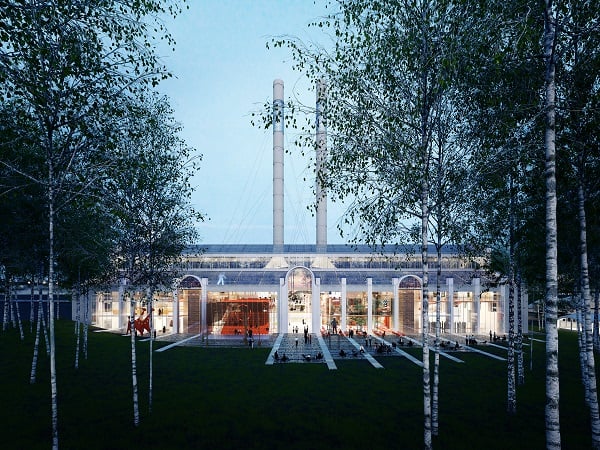
Rendering View of the Building from the Birch Forest, RPBW, 2015. Courtesy of V-A-C Foundation
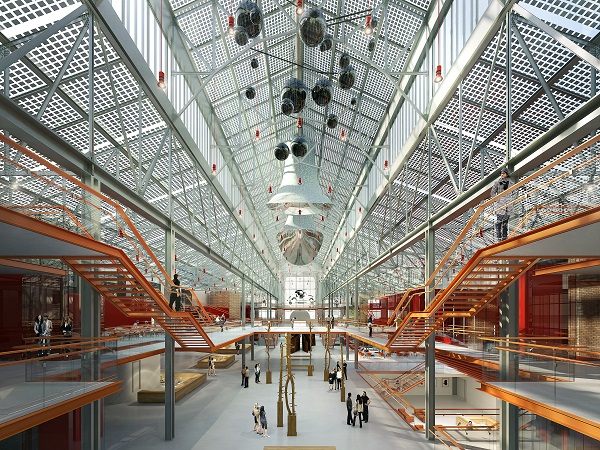
Leonid Mikhelson’s V-A-C Foundation is in the throes of constructing not only a vast new site for contemporary art in the center of Moscow, but an entire cultural ecosystem to underpin it. Set in “GES2,” a power station that was switched off this last Christmas, the V-A-C Foundation’s new headquarters will extend over two hectares of land in Moscow’s central Red October district. Rubber stamps permitting, renovation of the hundred-and-ten-year-old building will commence this autumn. Designed by Antonio Belvedere of Renzo Piano Building Workshop, current ambitions have GES2’s grand opening penciled in for spring 2019.
Currently listed by Forbes as “Russia’s richest man,” his estimated wealth of $16.2 billion derived from the gas and petrochemicals industries, Mikhelson has become an important supporter of the arts in the seven years since V-A-C’s inception. The foundation was a major donor to the Venice Biennales of art and architecture in the editions since 2013, and to the Saint Petersburg-based Manifesta in 2014. Since 2012 it has run an annual curatorial summer school in Moscow, which this year received over 100 applications for its 19 places.
Rendering View of the Centrale Nave, RPBW, 2015. courtesy of v-A-C Foundation
As well as traveling shows, commissions and works from Mikhelson and V-A-C’s collection—acquisitions for which have been steered, since 2009, by the Foundation’s director Teresa Iarocci Mavica—GES2 will house a considerable tertiary education program, and living quarters for artist residencies. Both are gestures toward what one might term cultural sustainability and locovore hiring practice: plainly put, this is a museum that will grow its own (often Russian) art, and the (often Russian) curators to nurture it, theorists to analyze it, archivists to tend it, and publishers to canonize it.
Rounding off the circle, in the three years attendant on the museum’s completion, V-A-C will toil to bulk up the audience for contemporary art in its home city, a project which will include, among other things, the development of close ties to schools. It’s all very well gifting a city with a new cathedral to culture, but there is no guarantee that audiences will pour forth in an avid torrent.
V-A-C harbors few illusions about Muscovites’ possible reluctance to engage with new art. Belvedere has conceived the museum almost as an elegant trap—a cultural space into which one is lured unawares, to sup on various enticements while transforming over gradual exposure, from snout to tail, into a ravenous art hog. A piazza will be created in front of the museum: a public space that extends into the building’s entrance hall, housing restaurants, cafes, a bookshop and other temptations. Within the museum—which is to be free and un-ticketted—the central strip is imagined as a boulevard through which the public might pass and engage with the territory of art in body, if not in mind.
"Ostalgia" catalogue cover. courtesy of V-A-C Foundation
“Ostalgia” catalogue cover. courtesy of V-A-C Foundation
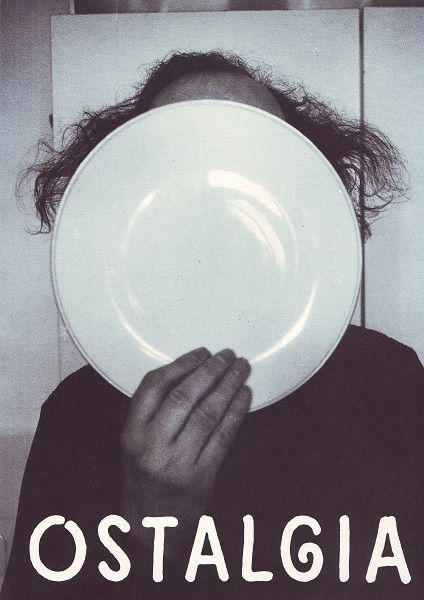
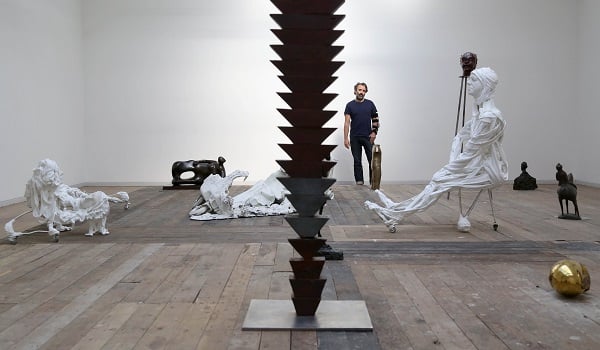
Internationally, the Foundation has already shored up institutional ties with the New Museum in New York (for which it co-produced the 2011 exhibition “Ostalgia”), the UK’s Tate museums (for which it is supporting the appointment of two curators for the Russian collection and Acquisition Fund until 2018), and London’s Whitechapel gallery, (which in the 2014-15 season presented displays from the V-A-C collection curated by Mike Nelson, Fiona Banner, Lynette Yiadom-Boakye and James Richards).
V-A-C has also nurtured links closer to home, staging exhibitions in the grandiose “Grain” pavilion at the All-Russian Exhibition Centre, and in Moscow’s Institute for African Studies. Such co-operative outreach paints a picture of an institution readying itself for engagement at the local level while embedding itself on the international scene. V-A-C’s resolve to look both inward to Russia and outward to the wider art world will be cemented by the unveiling of a first permanent site for the foundation at the Palazzo delle Zattere in Venice, an exhibition and education space that will open its doors at next year’s Venice Biennale.
Future Histories exhibition at the Venice Biennale 2015. Courtesy of V-A-C Foundation
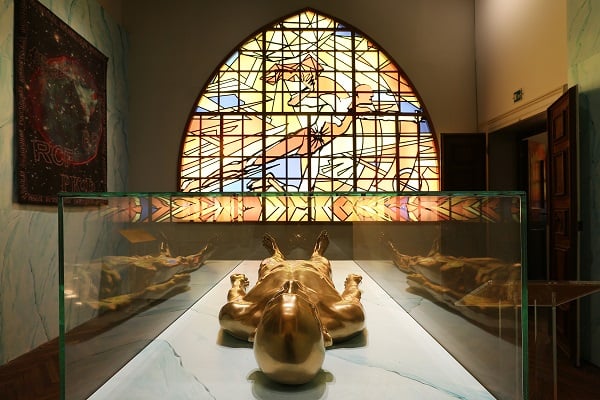
So much for the institutions, what about the art? A visit to Mikhelson’s Otlichnik estate some 45 minutes drive outside Moscow revealed a Carsten Höller slide installed in the grounds. The floating fish balloons of a Philippe Parreno piece bobbed around the atrium of V-A-C’s onsite gallery and intruded cheekily on an exhibition of intimately scaled works by Alighiero Boetti. The art storage facility of the same building—designed by experimental Moscow architecture studio MEL Space—reveal works by Sarah Morris, Gerhard Richter, Tauba Auerbach, Cindy Sherman, Gary Hume, and other names familiar from the contemporary checklist. There’s a photo by Sergey Sapozhnikov, but at first glance, fewer Russian and East European artists immediately evident than V-A-C’s stated dedication to the same might suggest.
While construction teams prepare to break ground on the GES2 site, and Palazzo delle Zattere is readied for its first exhibition, elsewhere the foundation is pursuing its activities at a hyperactive rate. This September sees the launch of the V-A-C Live program at London’s Whitechapel Gallery with three consecutive nights of performance that draw on the theater and cabaret of Russia’s early twentieth-century avant-gardes.
Artist Mike Nelson with sculptural works which form part of the V-A-C collection that Nelson has selected for the exhibition at the Whitechapel Gallery in London, 2014. Courtesy of Geoff Caddick/PA
In a rented top floor site in a 1970s block in the north of Moscow, Kirill Glushchenko’s exhibition “Our Days are Rich and Bright” came to a close this last weekend. A beautifully designed show of books and field recordings created by the young artist’s fictional publishing house Glushchenkoizdat, the overall project riffed off Soviet-era travel guides and the living heritage of brutal-modernist and prefabricated architecture. Curated by V-A-C’s head of exhibitions Katerina Chuchalina, this unconventional and generously installed exhibition presaged well for the Foundation’s dedication to support young artists in the future.
In a private dinner with Mavica, the foundation director admitted that V-A-C had come across Glushchenko’s project quite simply because he had dropped her an email. For such a well-resourced institution, this direct relationship with Russia’s grassroots art scene felt emblematic of a healthy lack of pomposity.

lunes, 4 de julio de 2016

Art Movements


Vincent Desiderio, “Sleep” (detail) (2008), oil on canvas (© Vincent Desiderio, courtesy Marlborough Gallery, New York) (click to enlarge)
Art Movements is a weekly collection of news, developments, and stirrings in the art world.
Art Movements is now available as a weekly email newsletter! Subscribe to our newsletters to get Art Movements delivered directly to your inbox every Friday morning.
A report published by the Commission for Looted Art in Europe (CLAE) concluded that over 10,600 works of art looted by the Nazis were sold by museums instead of being returned to their rightful owners. According to CLAE, numerous works entrusted to Bavaria’s State Paintings Collections by the Monuments Men were sold to the relatives of prominent Nazis or other parties after the war.
Unitar (United Nations Institute for Training and Research) released satellite imagesconfirming ISIS’s destruction of the Temple of Nabu in the Assyrian city of Nimrud in northern Iraq.
Artist Vincent Desiderio told the New York Times that he was pleased to discover that Kanye West’s new music video for “Famous” was directly inspired by his 2008 painting “Sleep.” In an interview with the Times, Desiderio revealed that he was flown out to meet West on the day the video premiered. “It was almost as if they were throwing a small surprise party for me. They were all smiling like the cat who ate the canary.”
Iranian satirical cartoonist Atena Farghadani posted a new cartoon to Facebookfollowing her release from Iran’s notorious Evin prison.
George Lucas abandoned plans to build the Lucas Museum of Narrative Art in Chicago following sustained opposition by nonprofit group Friends of the Parks.
The Barack Obama Foundation selected Tod Williams Billie Tsien Architects to design the Obama Presidential Center in Chicago.
Martin Jennings’s statue of Mary Seacole outside the grounds of St. Thomas’s Hospital, London (via facebook.com/SeacoleStatueAppeal) (click to enlarge)
A statue of Mary Seacole was unveiled in London. The Jamaican-born nurse cared for wounded British soldiers during the Crimean War, despite the home office rejecting her request to travel to the region. It is believed to be the first memorial statue dedicated to a named black woman in the UK.
The Stonewall Inn was designated a national monument by President Obama. The bar is the first of the United States’ 122 national monuments to commemorate the gay rights movement.
Artist Jennifer Miller (aka “Reverend Jen”), the founder of the Troll Museum, was evicted from her Lower East Side apartment. A video documenting Miller’s eviction was posted to Facebook.
Art dealer Nick Nicholson started a petition to name the corner of 57th and Fifth Avenue in Manhattan after the late New York Times fashion photographer Bill Cunningham.
The East Village performance space La MaMa released an expanded version of its digital collections website.
Anbang Insurance Group Co. plan to convert three quarters of the rooms at the Waldorf Astoria into apartments. The Chinese company purchased the art deco hotel for $1.95 billion last year.

Transactions

Jenny Saville, “Shift” (1996–97), oil on canvas, 130 x 130 in (courtesy Sotheby’s)
Jenny Saville‘s “Shift” (1996–97) was sold at Sotheby’s for £6.8 million (~$9.1 million), a record for the artist. The same sale also set a record for Keith Haring. “The Last Rainforest” (1989), one of the artist’s last paintings, sold for £4.2 million (~$5.6 million).
Ronald O. Perelman donated $75 million toward the construction of a performing arts center at the World Trade Center site.
Thomas Borgmann donated over 600 works of contemporary art to the Stedelijk Museum. The gift includes works by Cosima von Bonin, Cerith Wyn Evans, John Stezaker, Wolfgang Tillmans, and others.
Swiss conglomerate MCH Group — which owns the Art Basel fair franchise — acquired the digital image sharing platform, Curiator.
Wayne Thiebaud donated four of his paintings to the University of California, Davis.
Vasiliki Dwyer donated 23 artworks to the Tacoma Art Museum.
Kean University acquired three of Michael Graves’s properties in Princeton, New Jersey. The late architect left the properties to Princeton University, which rejected the conditions of the gift.
The Dallas Museum of Art and the San Francisco Museum of Modern Art jointly acquired Walter De Maria’s “Large Rod Series: Circle/Rectangle, 5, 7, 9, 11, 13” (1986).
Walter De Maria, “Large Rod Series: Circle/Rectangle, 5, 7, 9, 11, 13” (1986) (2016 Estate of Walter De Maria, Dallas Museum of Art through the DMA/amfAR Benefit Auction Fund and Collection of the San Francisco Museum of Modern Art) (click to enlarge)

Transitions

The Norton Museum of Art will reopen on July 5 with free admission following a major expansion project.
Guy Ullens, the founder of the Ullens Center for Contemporary Art in Beijing, is looking for a new benefactor and owner to develop the institution.
Philipp Demandt was appointed director of the Städel Museum and Liebieghaus Skulpturensammlung.
Chantel Pontbriand quit her post as director and CEO of Toronto’s Museum of Contemporary Art less than a year after her appointment.
Chris Siefert was appointed deputy director of the Parrish Art Museum.
Meg Onli was appointed assistant curator at the Institute of Contemporary Art at the University of Pennsylvania.
Tamsin Dillon and Rebecca Heald were appointed to curate the King’s Cross Project by the King’s Cross development partnership.
Ray Entwistle will succeed Simon Miller as chairman of Bonhams Scotland.
The Rosamund Felsen Gallery (founded in 1978) announced that it will permanently close this summer.
Chapter NY will move to a new space at 249 East Houston Street in September.
Galerie Thaddaeus Ropac will open a space in London’s Ely House in the spring of 2017.
The Center for Maine Contemporary Art opened its new building.
The exterior of the Center for Maine Contemporary Art (courtesy CMCA) (click to enlarge)

Accolades

Emma Sulkowicz received the National Organization for Women’s 2016 Woman of Courage Award.
The Robert Rauschenberg Foundation announced the recipients of its 2016 Artist as Activist Fellowships.
Hiwa K was awarded the 2016 Arnold Bode Prize.
The NYC Department of Cultural Affairs selected the Lost Collective for an artist residency providing support and encouragement for LGBTQ youth in the foster care system.
The Getty Research Institute selected Fiona Tan as the artist-in-residence for its 2016–2017 Scholar Year.
Independent Curators International awarded the 2016 Leo Award to art dealer Marian Goodman.

Opportunties

A Blade of Grass is accepting applications for its 2017 Fellowship for Socially Engaged Art. Applicants must be at least 25 years old and legally permitted to work in the United States. Deadline for entries is Monday, September 19.

Obituaries

Tony Feher, “It Seemed a Beautiful Day” (2002), plastic bottles with plastic caps, water, food dye, wire, rope (photo by Adam Reich)
Austin Clarke (1934–2016), writer and essayist.
Bill Cunningham (1929–2016), fashion photographer for the New York Times.
Tony Feher (1956–2016), sculptor.
Barbara Goldsmith (1931–2016), founder of New York magazine and author of Little Gloria … Happy at Last (1980).
Michael Herr (1940–2016), writer. Best known for Dispatches (1977), an account of the Vietnam War.
Peter Hutton (1944–2016), filmmaker.
Norman Longmate (1925–2016), historian. Best known for How We Lived Then (1971).
The cover of Alvin Toffler’s ‘Future Shock’ (1970) (via slidesharecdn.com) (click to enlarge)
Stanley Meisler (1931–2016), foreign correspondent for the Los Angeles Timesand author of Shocking Paris: Soutine, Chagall, and the Outsiders of Montparnasse(2015).
Kenworth Moffett (1934–2016), art historian. First curator of modern and contemporary art at the Museum of Fine Arts, Boston (1971–84) and director of the Fort Lauderdale Museum (1989–97).
Scotty Moore (1931–2016), guitarist.
Gordon Murray (1921–2016), puppeteer. Creator of the BBC children’s series Trumpton (1967).
Ben Patterson (1934–2016), artist and founding member of Fluxus.
Mack Rice (1933–2016), composer.
K G Subramanyan (1924–2016), artist.
Alvin Toffler (1928–2016), futurist. Author of Future Shock (1970).

domingo, 3 de julio de 2016

Declaration of Independence

LACMA Director Michael Govan on the Future of Museums


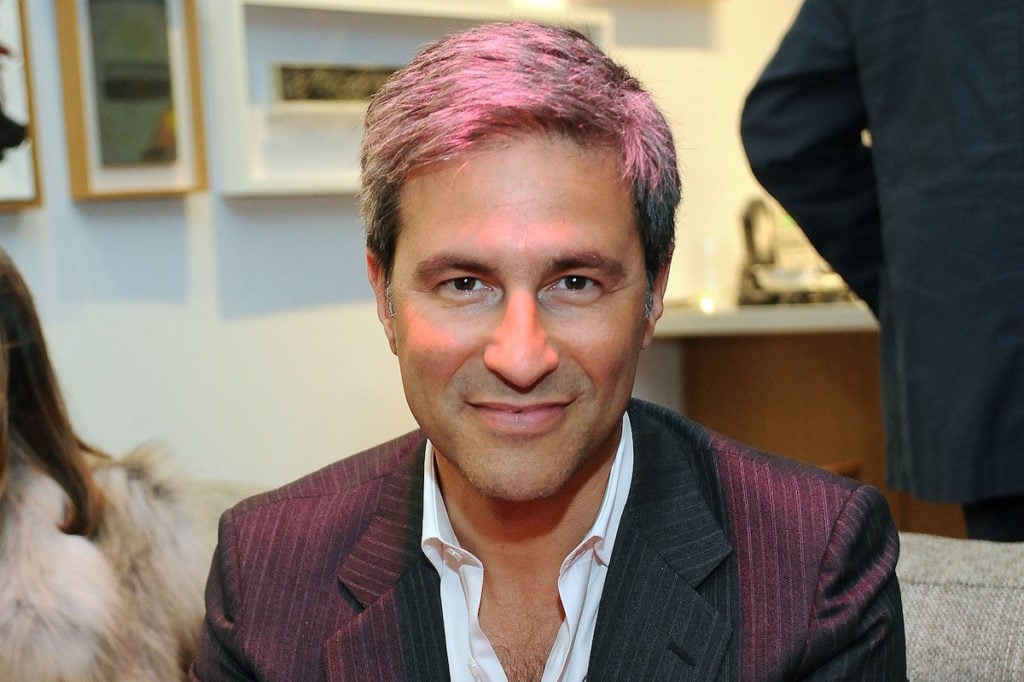
Michael Govan. Courtest photographer Andreas Branch, © Patrick McMullan.
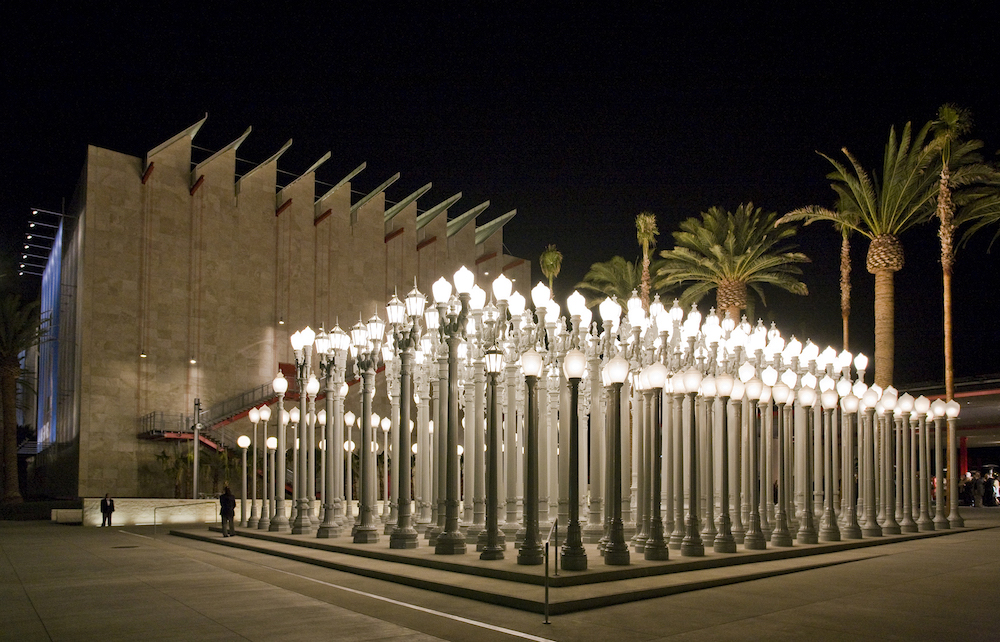
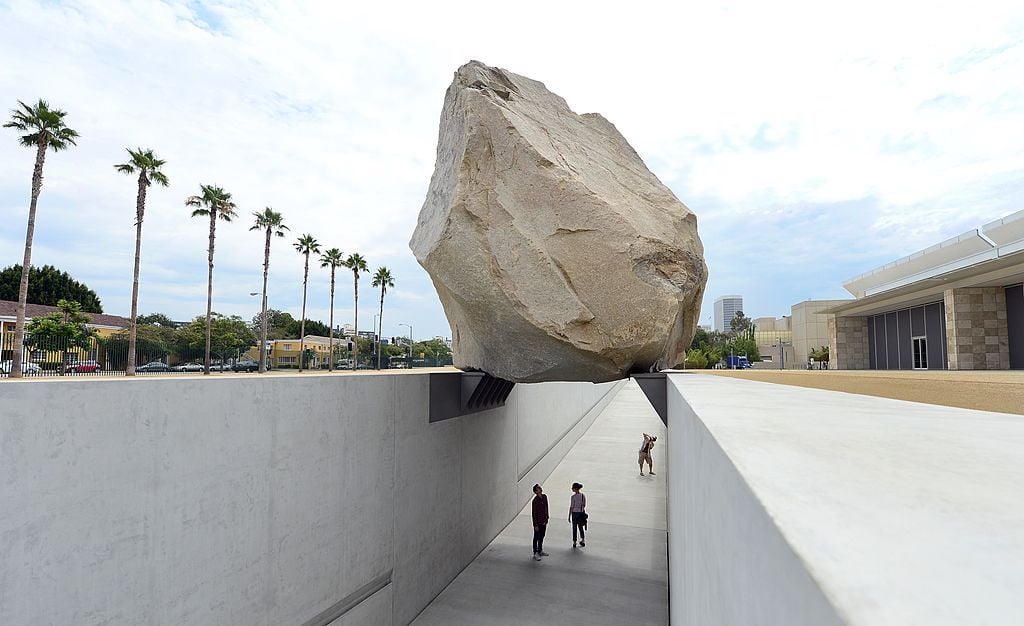
In his decade long tenure as director of the Los Angeles County Museum of Art (LACMA), Michael Govan has transformed and revitalized the institution to respond to the present-day community and visitors that it serves within Los Angeles county. A renewed focus on public projects and contemporary art installations saw the arrival of Chris Burden‘s Urban Light (2008)—which has become an LA landmark—and Michael Heizer‘s Levitated Mass (2012) refreshed the museum’s public image and caused attendance to almost double.
And he isn’t stopping there. A new half-a-billion dollar 400,000 square-foot building designed by architect Peter Zumthor is in the works to add some star power to the city. Construction is set to start in 2018 and is scheduled to be complete by 2022 or 2023.
On a tour of LACMA, we asked Govan about the role of museums in contemporary society, and what the future looks like for public museums amid an unprecedented rise in privately-owned museums.
Why do you think people like to attend museums and see art in the museum context?
Why is our attendance growing? Well, there are a lot of people here; we’ll hit 1.4 million people—which is not as big as the Met or places like that, but it’s pretty big, and it’s more than double what we used to have here. I think people with curiosity seek an education in what it is to be human and creative. And that curiosity is satisfied in a place that now can also be quite casual, pleasant and surprising to be in. So there is an aspect of education, and of entertainment and of a social milieu as well; coming with friends and meeting friends.
Chris Burden, Urban Light, 2008. Photo courtesy Los Angeles County Museum of Art.
Chris Burden, Urban Light, 2008. Courtesy the Los Angeles County Museum of Art.
How is the role of museums changing?
I think museum, big museums, are becoming public center pieces for cities, for metropolises. Because we sense our role is to create a place where culture and creativity and many cultures are on offer all the time. And so I think we take that civic role as seriously as we take the historic and preservation role of culture.
What is your view on the rise of private museums? And how it relates to competition for you?
One. There’s no competition at all from private museums in my mind for institutions like ours. There’s no private museum that even dares to do what we try to do in terms of the breadth of offering, the scale of public programs. I really don’t know one. You see private museums more as niche collections, and it’s fine to have them. You say rise but there was also in the ’30s and ’40s was a big rise in this country. At the end of the 19th century there was a rise in private museums too. The Guggenheim was a private museum; the Whitney was a private museum. A few of those private museums will become public; they’ll become big enough, their leadership will become responsive to the diverse concerns of their community rather than a specific collection or collectors and will morph into public museums. And then others won’t. Really, this is a case of more is more. Our culture benefits from more people who are willing to put their resources and energy, like Eli Broad, behind what they have accomplished and make it available to the public.
What do you make of the trend towards supersize museums?
I don’t actually think they’re that big yet! I’ve never heard that term “supersize.” I’m not sure we’re going to be building too many supersize museums. For example, when we’re finished with all this building—probably a billion dollar’s of investment over 20 years—we would fit into one part of one wing of the Metropolitan Museum of Art in New York. So I think there is a limit on what might make sense for us here in Los Angeles, and I think we might be seeing that. Our strategy is probably less to continue adding  here, than to maybe see off-site and satellites in other communities that could benefit.
Michael Heizer <i>Levitated Mass</i> (2012). Courtesy of Frederic J. Brown/AFP/Getty Images.
Michael Heizer Levitated Mass (2012). Courtesy of Frederic J. Brown/AFP/Getty Images.
What sets LACMA apart from other museums in the US and abroad?
There’s maybe 10 museums in the US on our scale. So that sets us apart from all the other museums because it’s our mission—unlike even the Getty that has European painting, photography, and classical and ancient sculpture—is that we try to be everything. We really try to be entirely open with no limits, and so that does distinguish us from the more specialized museums. And what sets us apart in the US is that we’re among a category of museums that in the old days it used to be called an encyclopedic museum, so you’d have A-to-Z and try to say you hold the world. Of course, that definition is always changing, and I rather think of these kind of museums as almost “anything goes,” whether it’s design, graphic arts, film, or painting. We have this openness to many, many definitions of art.
What does the future look like for museums?
No-one knows the future, but I think the future is bright. I think museums keep enlarging their sense of mission in the community, the diversity of what they offer—and I mean literally the diversity—the diversity of their staffs, and their boards to try to respond to this diverse world we live in. As long as we keep doing that, I think that we will continue to be central to civic life.

sábado, 2 de julio de 2016

Vidarte presenta en Washington al Museo Guggenheim Bilbao como ejemplo de colaboración vasco-estadounidense de éxito


Según ha informado la Diputación vizcaína, Vidarte se ha mostrado convencido de que el Guggenheim va a continuar contribuyendo a consolidar el posicionamiento "competitivo de Euskadi en el futuro". En el acto, que ha abierto el congresista John Garamendi para subrayar la "importante oportunidad de negocio" entre las empresas vascas y norteamericanas, ha intervenido también la consejera de Industria y Competitividad, Arantxa Tapia, y han estado presentes el alcalde de Boise, Dave Bieter; los diputados generales de Bizkaia, Unai Rementeria, Araba, Ramiro González, y Gipuzkoa, Markel Olano; y representantes de empresas vascas y estadounidenses. Durante su intervención, Vidarte ha explicado que el proyecto del Guggenheim surgió hace 25 años como "elemento esencial en una estrategia de transformación, basado en un enfoque profundamente innovador y con dimensión internacional y forjado gracias a un liderazgo institucional extraordinario capaz de afrontar el riesgo y las dificultades". En ese sentido, ha puesto de manifiesto el éxito del proyecto. "Es un ejemplo de colaboración vasco-americana de éxito y un referente de cómo una inversión cultural puede ser utilizada como herramienta de transformación. Y estoy convencido de que el Guggenheim va a continuar contribuyendo a consolidar el posicionamiento competitivo de Euskadi en el futuro", ha dicho.


El director del museo ha explicado cómo el principal objetivo perseguido por las instituciones vascas cuando se puso el proyecto sobre la mesa fue mejorar "nuestro posicionamiento como país mediante la creación de un activo que nos permitiera alcanzar una ventaja comparativa en el marco de una estrategia de refuerzo de nuestra competitividad". "El museo ha actuado como catalizador dentro de un plan más amplio en el que, además de convertirse en una institución cultural de referencia internacionalmente, ha sido un impulsor esencial en la regeneración urbanística de una parte de Bilbao y un factor de revitalización económica y de proyección de imagen en el exterior", ha asegurado el director del museo bilbaíno. Para Vidarte, el éxito del modelo Guggenheim lo reflejan algunos de los datos que ha presentado en la conferencia, como la percepción internacional de la imagen del museo (en 2015 cerca de 20.000 noticias llegaron a cuatro mil millones de lectores en prensa escrita de ocho países); el récord de visitas desde su inauguración en 2015 con 1.103.211 personas, lo que suman más de 18 millones de visitantes en toda su historia; o el impacto de transformación que ha tenido para la economía vasca, que asciende a más de 360 millones de euros en 2015. El director del Guggenheim ha subrayado la relevancia de la identidad que define al museo y ha destacado su audiencia internacional, el ser un proyecto asociativo, su contenido dinámico y de calidad, el edificio, su dimensión educativa y tener un modelo de gestión centrado en la experiencia del visitante, la sostenibilidad financiera y su integración con la comunidad.


BLANCA ORAA MOYUA

Archivo del blog