ARTSLANT'S SPECIAL EDITION
FRIEZE NEW YORK #2

Tracy Moffat, First Jobs, Housekeeper, 1975, 2008; Courtesy of Tyler Rollins Fine Art and PULSE Contemporary Art Fairs, C8.
Art Critic’s Warning: an experience of Way Too Much may result in the mental and visual impairment known as “art-malaise,” or “A.M.” Symptoms include eyestrain, inability to concentrate, short-term memory loss, stiffening of major muscle groups, emotional exhaustion, and general indifference. Children, pregnant women, and the elderly are at the highest risk.
I used to think the proper way to experience an exhibition of art was slowly,moving at a stroller’s pace and pausing frequently. Stillness seemed necessary if close examination was to be part of the point, which of course it was. After all, looking at art was serious business, a solemn procedure, a moment for reverence and reflection. I picked up this behavior watching others and never questioned it until one afternoon back in 2008. I was lingering over a fine marble statue in one of the neo-classical sculpture galleries of the Tate Britain when suddenly zoom! a woman in a track suit sprinted past me. Half a minute later here comes a man, legs thrusting, arms pumping, head thrown back; swoosh! his footfall creating a great echoing racket in the high ceilinged space. When I asked a guard what was going on he informed me that the runners were part of Martin Creed’s latest effort, “Work No 850.” The best advice he gave me was to look both ways before crossing the hall.

Yuji Agematsu, Untitled (March 15, 2012), 2012, Mixed media in cigarette cellophane, approx 3 x 2 x .75 in. Courtesy of Real Fine Arts. At NADA NY, Booth 50, 4th fl.
I still walk, often slowly, through art galleries, but since that afternoon I’ve at least been conscious of my movement, aware that it’s only one of many ways to experience works of art, and who am I to rank methodologies? What I do know is that finding one’s limits, the edges of the old comfort zone, is more profound than setting them arbitrarily. Until you’ve spent an entire day in a museum, open to close, how can you really appreciate dropping in for the quick hour? Extreme positions have a tendency of informing one’s perspectives more drastically than moderate ones. This may be obvious, but it’s really quite rare for us creatures of comfort to willfully abandon the habits and routines that structure our daily doings. Well, this is an invitation to do just that, here’s a marathon experience for the art viewer: The “Fair-a-thon.”
 Banks Violette, Untitled (88), 2011-12, steel, two parts, 79 x 47 1/2 x 12 inches each, courtesy Team Gallery, at Frieze C4.
Yuji Agematsu, Untitled (March 15, 2012), 2012, Mixed media in cigarette cellophane, approx 3 x 2 x .75 in. Courtesy of Real Fine Arts. At NADA NY, Booth 50, 4th fl.
I still walk, often slowly, through art galleries, but since that afternoon I’ve at least been conscious of my movement, aware that it’s only one of many ways to experience works of art, and who am I to rank methodologies? What I do know is that finding one’s limits, the edges of the old comfort zone, is more profound than setting them arbitrarily. Until you’ve spent an entire day in a museum, open to close, how can you really appreciate dropping in for the quick hour? Extreme positions have a tendency of informing one’s perspectives more drastically than moderate ones. This may be obvious, but it’s really quite rare for us creatures of comfort to willfully abandon the habits and routines that structure our daily doings. Well, this is an invitation to do just that, here’s a marathon experience for the art viewer: The “Fair-a-thon.”
First the facts: in a single afternoon you’ll visit three art fairs, and pass by 307 galleries; you’ll travel by foot, ferry, train, and bus; you’ll need $60 to cover admission fees, and let’s say $10 for transportation. You’ll see the work of more than 1000 artists and every continent will be represented. It could be fun, but it’s not going to be easy, though I can just about guarantee that you’ll be intrigued and perhaps surprised by what work ends up sticking in your mind when you finally come to rest, thank god or whomever, at an establishment serving adult beverages.
Here’s how it goes: the Fair-a-thon begins at high noon, when the fair grounds open...
...Click here for the Fair-a-thon itinerary with Charlie...
See you in New York!
–the ArtSlant Team
FAIR WATCH - Trudy Benson

Trudy Benson, Snowball, 2012, Acrylic, oil enamel, spray paint, and oil on canvas, 63 x 68 in; Courtesy of Mike Weiss Gallery, at Pulse, A7.
Trudy Benson's paintings are bold and bright, made of total material excess. ArtSlant's New York team has had their eyes on this artist for quite some time. Read Aldrin Valdez's review of Benson's latest exhibition at Mike Weiss Gallery, and Emily Nathan's review of Benson's first solo show, following her graduation from Pratt:
Her application of paint seems everywhere intentional: when it cracks, it cracks; when it drips, it drips. It smudges, scuffs and peels, it stands away from the canvas, inserts itself literally into your space, and when it strokes it is as smooth and seamless as a bicycle-frame. To appreciate the works’ materiality is one thing; to recognize that the works are declaratively abouttheir material, and, further, to integrate this very physical experience of art-viewing into an arsenal of experiences which are generally anything but—are critical, sarcastic, disaffected, diluted, self-deprecating—is a truly welcome aberrance.
ARTSLANT INSIDER* - Artspace

Artspace - Own a Damien Hirst, a Cindy Sherman, a Julian Schnabel or one of the many, many other acclaimed and emerging artists available on Artspace.com. Sign up for a free membership today and get insider prices, early access to works, invitations to exclusive events. You'll be entered to win $5,000 worth of art -- any artist, any work -- your choice..
FAIR WATCH - Trevor Paglen
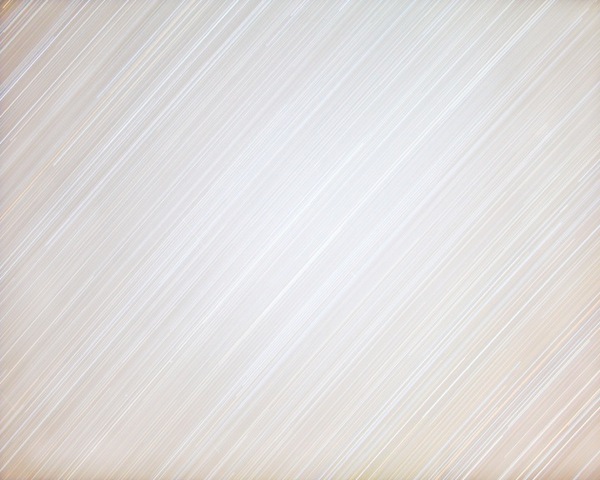
Trevor Paglen, “The Clarke Belt” (Dead Communications and Surveillance Spacecraft in Perpetual Earth Orbit), 2012, C-print, 48 x 60 in. Courtesy of Altman Siegel Gallery. Frieze Focus, F5
Showing with San Francisco's Altman Siegel Gallery in the Frieze Focus section of the fair, Trevor Paglen will show three new photographs of satellites and weapons testing ranges. Paglen's stunningly beautiful prints belie their rather dark and necessarily mysterious subject matter. For more on Paglen's work read Brady Welch's review of his exhibition at Altman Siegel last year:
[Paglen's] deeply compelling visions of the sublime are channeled through a vast and shadowy network of military spy satellites, unmanned drones, and desert testing grounds. By working at great distance, literally shooting his photos miles from his subjects, Paglen gives form to a largely redacted reality. It is only a version of truth, of course, and a partial one at that. But they are a statement or a reality—of an existence—where before there was none.
TALK OF THE TOWN - Some Full Circle on Randall's Island: John Ahearn at Frieze Projects
by Natalie Hegert
Sculptors John Ahearn and Rigoberto Torres will be presenting a reconstruction of their seminal 1979 exhibition, South Bronx Hall of Fame, for Frieze Projects. Natalie Hegert considers the significance of Ahearn's work on the site of Randall's Island--which formerly housed the headquarters of Robert Moses, the powerful urban planner who created the conditions from which Ahearn drew his populist subject matter.
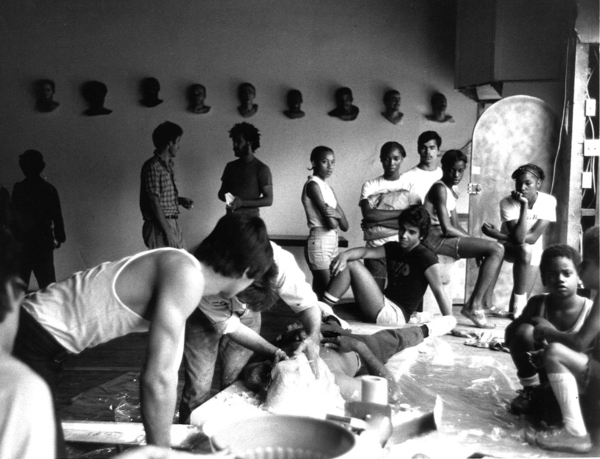
John Ahearn, "South Bronx Hall of Fame at Fashion Moda," Bronx NY 1979. Torres (left, in white undershirt) and Ahearn (center) during casting of Carlos, with Fashion Moda co-directors, Stefan Eins and Joe Lewis (standing background, left to right). Photo by Christoph Kohlhofer.
Some people living in New York have great views, most don’t. Where I lived in Greenpoint, Brooklyn, the view from the front of the apartment overlooked an off-ramp from the Brooklyn-Queens Expressway. Day and night trucks would rumble past, slamming into potholes and screeching on their brakes. The building would literally shake—a constant earthquake—with the only respite on Sunday mornings or during the occasional blizzard. If any windows were left open, within a few hours a layer of fine soot would settle on my desk, on the window sills, on the counter tops, on the coffee table—the black grimy airborne remnants of the countless rubber tires wearing away with each rotation on the BQE. Greenpoint is a sweet little neighborhood just a few blocks away, but where I lived it was miserable: loud, dirty, miserable.
Many such expressways criss-cross the boroughs, all because of one man: Robert Moses, the urban planner and “master builder” of mid-twentieth-century New York. Along with his parkways, expressways, plazas, tunnels, and bridges, Moses created many of the parks New Yorkers enjoy today. Yet he also displaced over 250,000 people and demolished hundreds of buildings to make way for his projects: like the Cross-Bronx Expressway that cut right through the middle of the South Bronx, transforming it from a viable, working-class neighborhood into one of the worst slums in the United States. His biographer, Robert Caro, described Moses gazing at an enormous map of the city that hung on his office wall, as “a sculptor who wanted to sculpt not clay or stone but a whole metropolis.” Moses never compromised his Corbusian vision for the city based on human cost; when asked whether he found it difficult to build expressways through dense urban centers, he simply replied, “There are more people in the way — that’s all."

John Ahearn, Butch and Earl, 1979, acrylic on plaster, 33 x 18 x 10 in; Courtesy of Alexander and Bonin, New York. Photo Jason Mandella.
In 1979, seven years after the Cross-Bronx Expressway was completed, at a time when the South Bronx was in the throes of destitution, John Ahearn presented an exhibition called South Bronx Hall of Fame at the young art center Fashion Moda. Ahearn is a sculptor; but unlike Robert Moses who cast aside people to sculpt his metropolis, Ahearn immortalizes those selfsame people in plaster busts and in life-size statues. Ahearn set up shop outside of Fashion Moda’s Bronx storefront, which had been established by fellow Colab artist Stefan Eins a year earlier (see my interview with Eins), and, along with his collaborator Rigoberto Torres, created plaster life-casts of neighborhood people, artists, friends, local children, as well as junkies from the methadone clinic across the street. These plaster busts were then painted, and mounted on the wall, high above eye level, as though these people, everyday people, were gazing down on you like a pantheon of demi-gods...
Read more of Natalie's article on John Ahearn's South Bronx Hall of Fame on Randall's Island here...
ARTSLANT INSIDER* - CREAM HOTEL

CREAM HOTEL - cream*hotel® (*Creative Real Estate Art and Marketing) is a boutique firm that creates unique lodging solutions by offering vacation rental apartments where art and design meet to create an innovative and effortless stay. creamhotel's properties become showrooms where tenants have the opportunity to enjoy a private exhibition of the most contemporary art in their chosen city as well as buy the artworks on display. creamhotel’s art department, creamgallery™, is a moving gallery that exists in spaces where people live, work and create. creamgallery embraces all types of media to be selected for our curated apartments, exhibitions and online creamcollection, where artists promote and sell their artworks online. creamhotel is present in New York, Miami, London, Buenos Aires, Bogota, Medellin,Florianopolis, São Paulo, Cartagena, Playa Del Carmen, Punta Del Este.
ARTSLANT INSIDER* - Art is Shit Editions
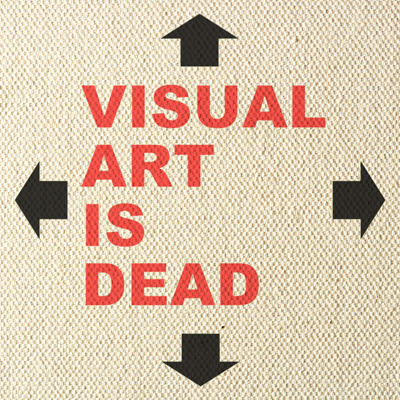
Art is Shit Editions - A sophisticated hijacking of the aesthetic principles of art. The name “Art Is Shit” is a humorous slant on art which views artwork purely as functionless objects when stripped of all artistic significance and removed from its context. Art Is Shit Editions is a Los Angeles, CA-based art publishing company that works with emerging contemporary artists whose work often challenges the boundaries of what is publicly perceived and deemed acceptable as “art”. The editions we produce often use found objects, appropriation, or nontraditional materials, thus creating provocative, sometimes outlandish, yet conceptually challenging ideas and meanings in the work. AIS Editions was founded in Providence, RI in 2009 by two RISD graduates, Ryan McIntosh and Danielle Lange.
ARTSLANT INSIDER* - Leland Bobbé
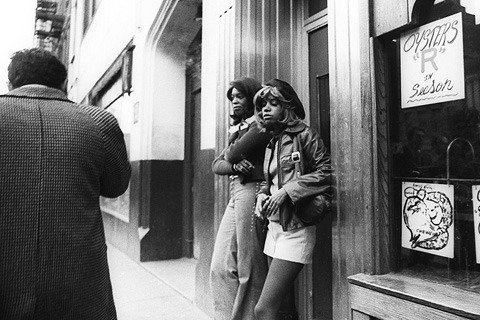
Leland Bobbé, The Life, from the New York City 1970s series.
Leland Bobbé - Photographer and quintessential New Yorker, Leland Bobbé photographs urban subjects, portraits, and landscapes. Bobbé's series of New York street photography from the 1970s captures the gritty side of the city during this unique period in New York City history, a time when Times Square wasn’t a playground for Middle America and The Bowery was the last stop for many out on their luck. This work was recently featured in the New York Times and the NYT City Room Blog.
ARTSLANT INSIDER* - Kathryn Hart
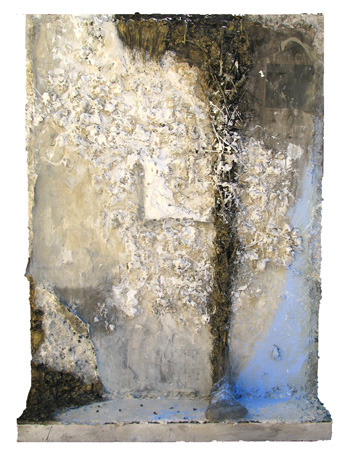
Kathryn Hart, Metamorphosis VI, 2012, 32 x 24 x 7 in.
Kathryn Hart - "My works reflect the human condition, all of its crags and crevices, what we want others to see and what we hide…" After establishing a national reputation as a representational painter, Kathryn Hart turned to highly abstracted work and conceptual-based painting. The works' tactility is key: like a sculptor, Hart balances the painting’s surface as much by touch as its visual qualities. Kathryn Hart currently resides in Larkspur, Colorado. The work pictured above will be featured at New Century Artists Gallery in Manhattan (Chelsea) for the month of June.
ARTSLANT INSIDER* - William T. Rohe
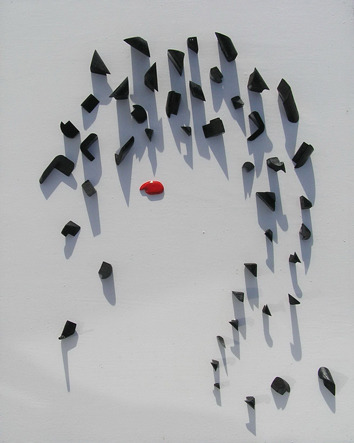
William T. Rohe,Concept 2, 2009, wood chips on board, 78 x 63cm.
Willliam T. Rohe - An artist and architect, William T. Rohe works in sculptural montage, as well as painting, drawing, and mixed-media. In his montages, such as the piece pictured above, a primary concern is the interplay of light, shadow, and form. Rohe lives on the island of Aegina, in Greece.
ARTSLANT INSIDER* - Debbi Chan
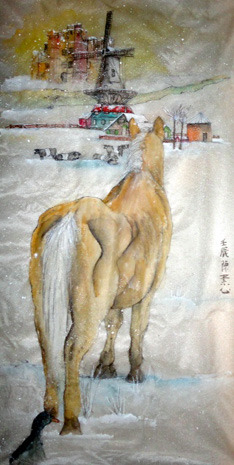
Debbi Chan,
Debbi Chan - Debbi Chan's representations of the natural world stem from traditions of Chinese painting, and find expression primarily in watercolor and ink paintings on silk and rice paper. Chan also creates deep relief carvings in natural materials such as wood, stone, bone, antler, and ivory, as well as working in other media such as embroidery, artist books, etchings, and prints.


No hay comentarios:
Publicar un comentario